Sawmill vs forestry wood chips — a procurement comparison for heating plants
Sawmill delivers stable parameters at a higher price; forestry offers a lower price with variable moisture. Concrete price ranges, when each type pays off, boiler-side risks.
The core difference
Sawmill chips are a by-product of wood processing — bark, shavings, offcuts. Produced at a steady rate all year because sawmills run all year. Consistent parameters: low moisture (30–40%, wood is kiln-dried before processing), uniform 20–63 mm fraction, low bark content. Calorific value 10–12 MJ/kg (ar).
Forestry chips come from in-forest harvest — branches, tops, small-diameter wood, wood not sold as saw timber. Seasonal availability, higher moisture (40–55% — rain-exposed in the forest), non-uniform fraction 10–100 mm. Calorific value 8–10 MJ/kg.
Wholesale price gap between the two runs 80–150 PLN/t — forestry cheaper. But the effective PLN-per-GJ often narrows because forestry carries less energy per tonne.
When sawmill is the right pick
BFB (bubbling fluidised bed) or CFB (circulating fluidised bed) boilers with tighter fuel-parameter requirements — they want moisture within ±5%, consistent fraction. Sawmill chips delivered weekly from one mill (or a network of 3–5 mills with similar parameters) meet this without effort.
Municipal heating plants with ISO 9001 certification requiring strict per-batch quality paperwork — sawmill fits the system because it comes from one controlled source.
Industrial users burning chips for process heat (drying in wood, furniture, food-processing plants) — they need repeatability.
When forestry is fine or even better
Older grate-fired boilers — they tolerate variable moisture and fraction. Forestry burns without major issues; the plant pays less per tonne and accepts lower calorific value.
Local heating plants up to 3 MW with simple boilers and tight operating budgets — forestry delivers a real 15–20% saving on annual fuel cost at acceptable parameter stability.
Aiming at maximum biomass share in a mix with sawmill + PKS + sunflower — forestry becomes the natural volume floor.
Price picture, season 2026/2027
Prices in Poland (October 2026, bulk, CIF customer warehouse, central Poland):
- Sawmill chips 30–40% moisture: 320–380 PLN/t net
- Forestry chips 45–55% moisture: 220–290 PLN/t net
Effective per-GJ price (assuming 10 MJ/kg sawmill, 8 MJ/kg forestry, boiler efficiency 85%):
- Sawmill: 37.6–44.7 PLN/GJ
- Forestry: 32.4–42.6 PLN/GJ
Conclusion: forestry usually wins on per-GJ price but the gap is smaller than the per-tonne headline suggests.
Technical risks often missed at procurement time
Chlorides and nitrogen
Forestry chips from branches and tops carry slightly higher chloride and nitrogen levels than sawmill chips (bark, needles, small leaves in the mix). Not near PKS or sunflower levels, but in a CFB with hot-side heat-exchanger tubes above 400 °C, chlorides raise corrosion risk.
Safe practice: for a CFB with heat-exchanger surface >400 °C, ask the supplier for average chlorine content. Should be below 0.04% (sawmill typically 0.01%, forestry 0.02–0.05%).
Fraction size and feeder jams
Forestry has non-uniform fraction — pieces >100 mm, sticks, needle fines. A well-designed screw feeder copes; an older plate or belt feeder may jam. The supplier's contract should carry an oversized-fraction clause (typically <5% of mass).
Moisture and boiler power
A boiler designed for 30%-moisture fuel receiving a 55% batch loses instantaneous output ~30% moving from 30% to 55%. If boiler controls do not have a good adaptive loop, production dips will happen. Fix: buffer in the warehouse, blend old and new batches, ease the boiler into rising moisture step by step.
GFT's practical recommendation
60/40 sawmill+forestry blend is the compromise we recommend for most municipal 3–15 MW heating plants with boilers under 15 years old. Volume floor from forestry (cheaper), parameter stability from sawmill. ~10% saving versus 100% sawmill at practically the same production stability.
40/60 for older <5 MW plants with simpler grate boilers — forestry dominates because it works, sawmill goes in as moisture "polish".
100% sawmill for newer plants with BFB/CFB and strict documentation requirements — simple, predictable, more expensive.
FAQ
Can I buy sawmill and forestry chips in one contract? Yes — that's standard with us. The framework contract carries two volumes: sawmill and forestry, with a weekly schedule that shifts proportions. The customer gets sawmill when forestry is expensive (late winter, early spring) and more forestry when harvest is in full swing (autumn).
How long can I store chips? Sawmill: 4–6 months under cover; longer risks moisture uptake and mould. Forestry: 2–3 months — it arrives wet and mould develops faster. Longer storage requires turning the pile (spontaneous composting = calorific-value loss).
What if a batch is wetter than declared? Standard contract clause: deviation up to 5 percentage points → within tolerance. 5–10 pp → batch discounted 8–12% (proportional to lost calorific value). >10 pp → right to refuse or free replacement.
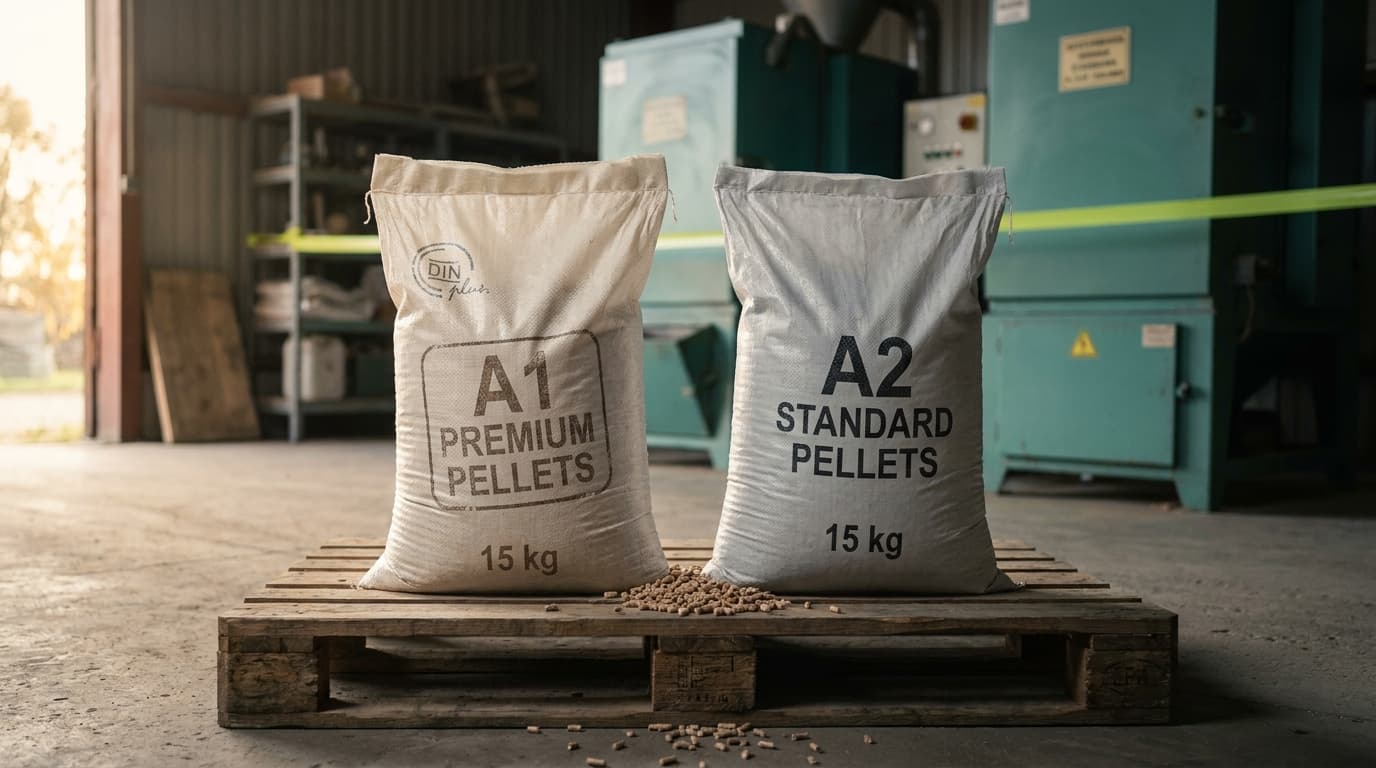
Can forestry be co-fired with pellet? Not recommended. Forestry has variable moisture, pellet is fixed (≤10%). Introducing forestry into a pellet stream produces power ripples the controls barely absorb. Better sequence: forestry → sawmill → A2 pellet (if mixing at all).
Summary
Sawmill vs forestry is a stability-vs-price trade. Neither is objectively better — one is better for your boiler and budget.
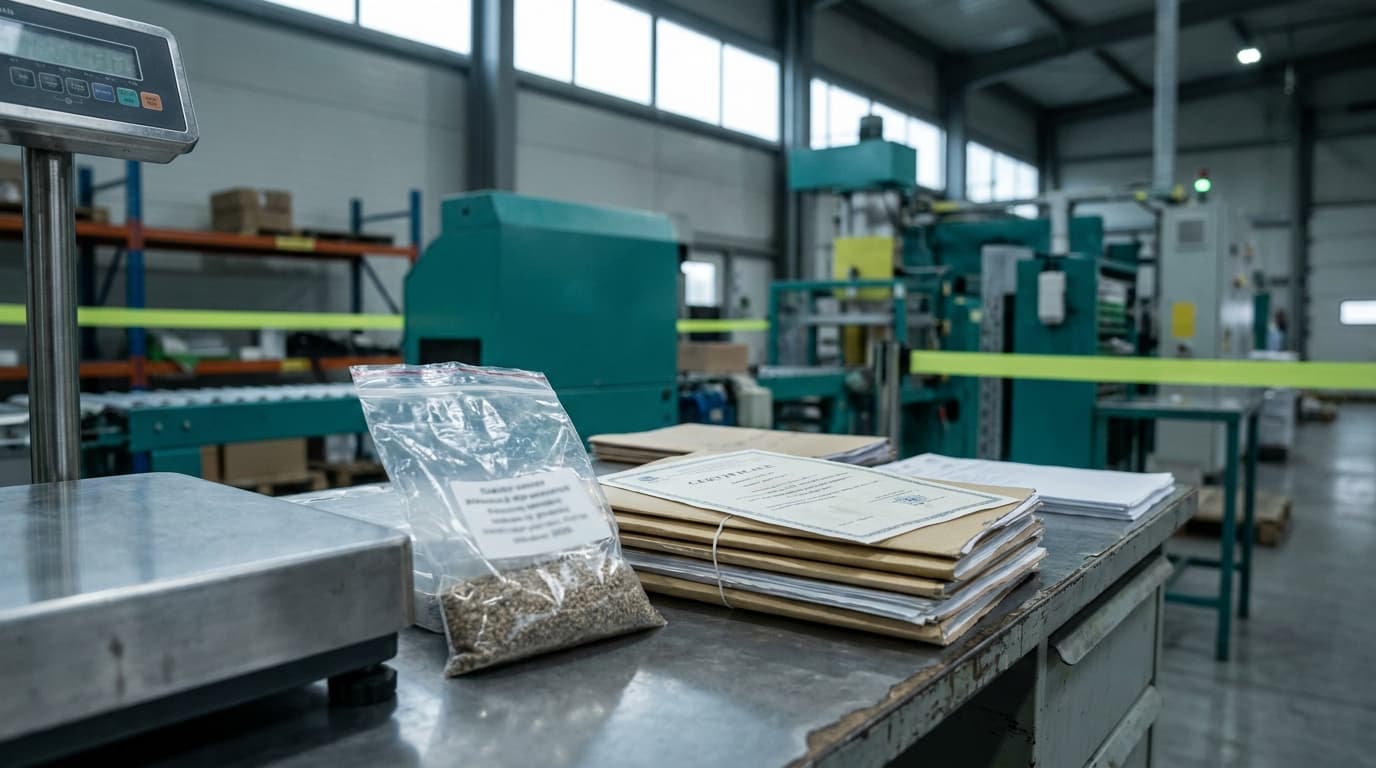
Green Fuel Trading delivers both, including a blended contract. For a new customer we recommend a 5-day audit: three samples of each type to an accredited lab for full analysis (calorific value, moisture, ash, chloride, sulphur, nitrogen, halogens). On that basis we tune the blend to your boiler's parameters.
Contact the GFT team — audits are free for prospects considering a seasonal contract from 3,000 t.