PKS as a 15–25% mix in utility power — practice and chloride risk
High calorific value 18–21 MJ/kg and low PLN/GJ. But chlorine 0.15–0.30% demands aware operation — when 15%, when 25%, and what to monitor.
Why PKS entered Polish utility power
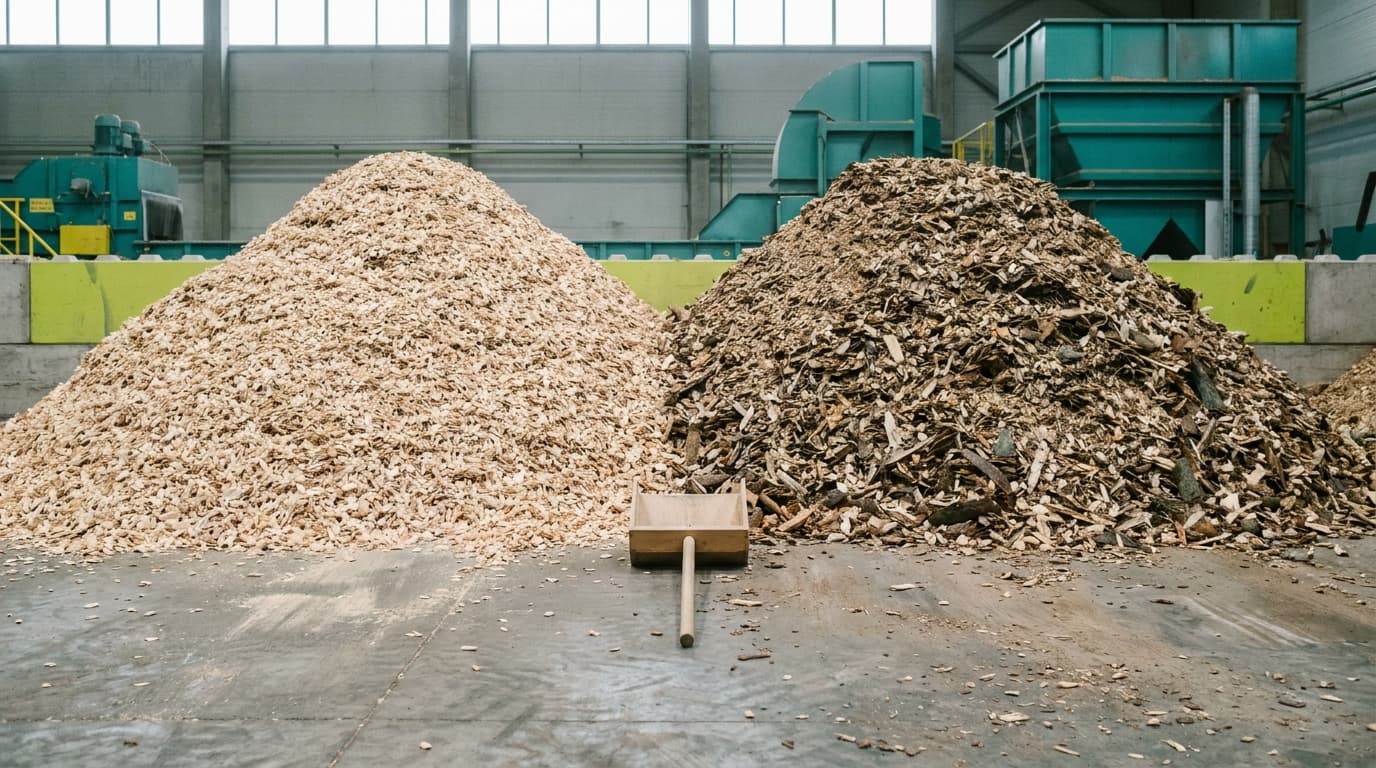
Palm Kernel Shell is the hard shell of the oil palm (Elaeis guineensis) — residue of palm-kernel-oil pressing. Produced at scale in Indonesia, Malaysia and West Africa (Ghana, Ivory Coast). Used in European utility power from 2010, in Polish CHP plants from 2015.
Parameters:
- Calorific value: 18–21 MJ/kg (highest among biomasses — above wood, sunflower and wood pellet)
- Ash: 3–5% (above pellet, below sunflower)
- Moisture: ≤ 15% (secure container)
- Mechanical durability: N/A (loose material, not pelletised)
- Price (October 2026, CIF Poland): 860–980 PLN/t (5,000+ t volumes)
Key advantage: highest calorific value among market biomasses. One tonne of PKS delivers more GJ than one tonne of A2 pellet. PLN/GJ is competitive with A2.
Chloride risk — the key parameter
PKS carries chlorine 0.15–0.30%. Clearly above sunflower (0.08–0.15%) and 5–15× above wood.
Boiler consequences:
- Heat-exchanger corrosion accelerates 8–15× at wall temperature > 400 °C versus clean wood
- HCl emission rises proportionally to PKS share
- Deposits on tubes — faster fouling formation
Polish utility practice: PKS enters as a 15–25% blend. Never alone. Never above 25% in a standard biomass boiler.
Blend by boiler type
Low-temperature BFB (bed 700–850 °C)
Dominant type in newer Polish CHP plants. Tolerance: PKS 20–25% blended with A2 pellet or sawmill chips. Below 400 °C on exchanger walls — chlorine is less aggressive.
CFB (bed 800–900 °C, exchanger up to 500 °C)
High exchanger temperature = high chlorine sensitivity. Tolerance: PKS max 15%. Above — real risk of mid-season exchanger shutdown.
Grate boiler for biomass
Less common for PKS (grate is not optimal for loose material). If used — PKS max 15%, and only in adapted boilers.
Economics of 20% PKS in a 25 MW CHP plant
Annual biomass demand: 40,000 t. Without PKS: 100% A2 pellet.
- Option A (no PKS): 40,000 × 950 = 38,000,000 PLN
- Option B (20% PKS + 80% A2):
- PKS: 8,000 × 920 = 7,360,000 PLN
- A2: 32,000 × 950 = 30,400,000 PLN
- Total: 37,760,000 PLN
- Gross saving: 240,000 PLN/year
Much less than sunflower. Reason: PKS is pricier than sunflower (higher European demand). But it delivers higher parameter stability and lower alkali risk (less ash sintering).
PKS's added value is logistical stability — deliveries in 3-month cycles from port, predictable seasonal pricing (fewer swings than sunflower from a war-affected region).
KZR — ISPO and RSPO
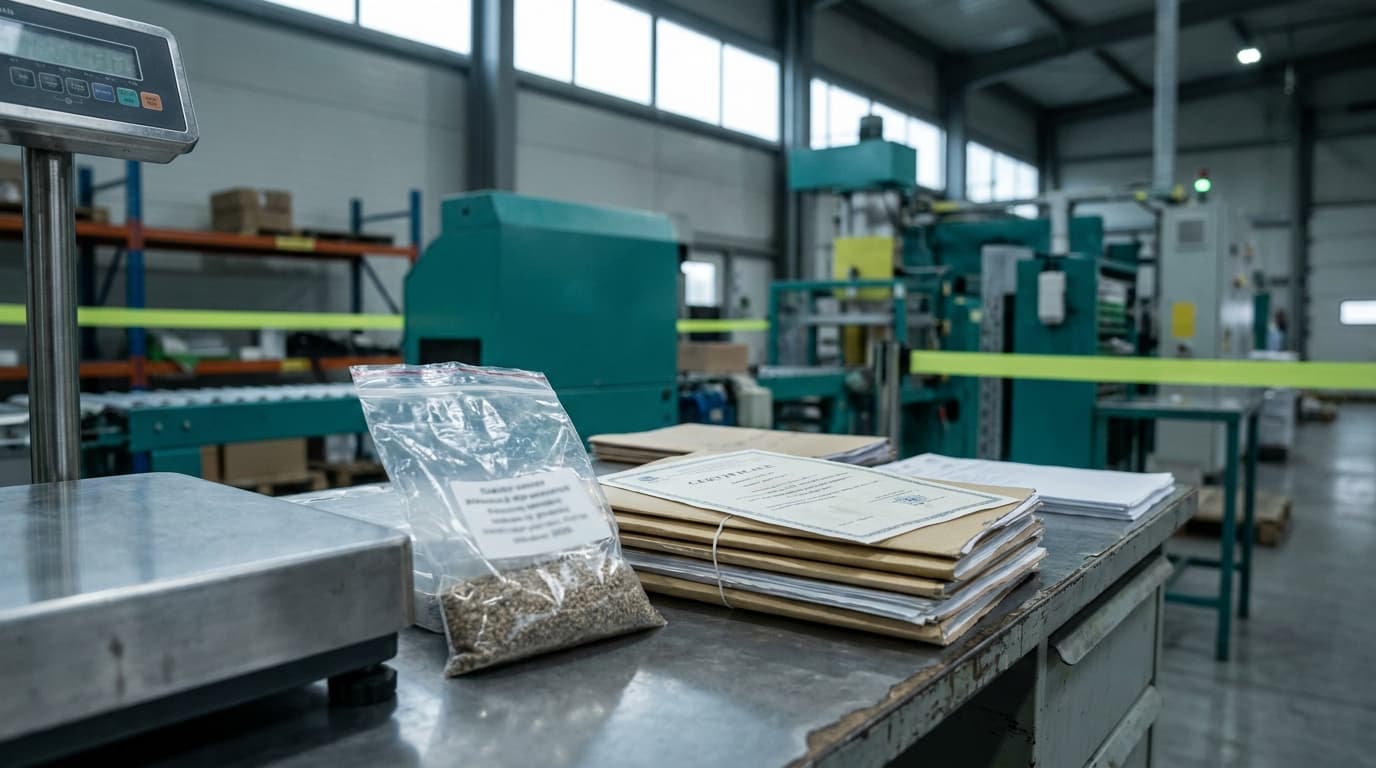
PKS imported to the EU needs KZR in the tropical-import context. Suppliers document origin via:
- ISPO (Indonesian Sustainable Palm Oil) — government cert of Indonesia, mandatory for all Indonesian palm-oil producers
- RSPO (Roundtable on Sustainable Palm Oil) — international private cert, higher ethical standard (no deforestation, fair labour)
For a Polish end customer both suffice, but RSPO reads better in district-heat marketing (the customer may itself sit under CSR audit).
PKS GHG emissions: 12–18 kg CO2 eq/GJ — above Polish wood pellet (but below Baltic pellet shipped by boat). Reason: sea transport Indonesia → Poland generates emissions offset by the low harvest footprint (residue, not dedicated production).
Monitoring in practice — three parameters
For a CHP customer with a first PKS contract we recommend monitoring:
- Chlorine in fly ash — sampled every 2 weeks, accredited-lab analysis. Norm: < 0.8% chlorine in ash at 20% PKS blend. Above → adjust proportion.
- HCl at boiler outlet — continuous online (if the boiler has the system), logged. BAT norm: 3 mg/Nm³ as daily mean. At 20% PKS usually within.
- Exchanger tube condition — endoscopic inspection every 6 months. Log signs of pitting corrosion. If corrosion rate > 0.15 mm/year → cut PKS share.
Common PKS procurement mistakes
1. Buying on price alone (no chlorine control)
Three PKS suppliers from Indonesia, prices 850, 890, 920 PLN/t. Customer picks the cheapest. Problem: the cheapest supplier had the weakest QC and the first batch carried chlorine 0.35% (vs declared 0.20%). Result: accelerated exchanger corrosion, tube replacement two years early, cost 400,000 PLN.
Safe practice: batch analytical certificate before unloading plus own test at an accredited lab for the first 3 batches from a new supplier.
2. Blends above 25% "because it works"
Customer tests 25% → works → tries 30% → works short-term → keeps it. Problem: cumulative chloride effect surfaces after 8–12 months. Exchanger starts corroding faster, invisible near-term. Unplanned failure in three years.
Safe practice: do not exceed the recommended limit even if it seems to work short-term.
3. No ash monitoring on supplier switches
Customer contracts PKS with supplier X. Contract ends, moves to supplier Y (cheaper). New batches have a different chemistry (different region, different parameters). Boiler without monitoring hits problems in a month.
Safe practice: on every supplier switch — analytics on the first 3 batches.
FAQ
Why is PKS pricier than sunflower? Higher calorific value, higher European demand (CHP pays willingly for energy density), pricier transport (sea from Asia).
Can PKS be stored under cover? Yes, long-term (up to 12 months) — moisture-tolerant (wet shell keeps parameters better than wood). In a closed silo — even longer.
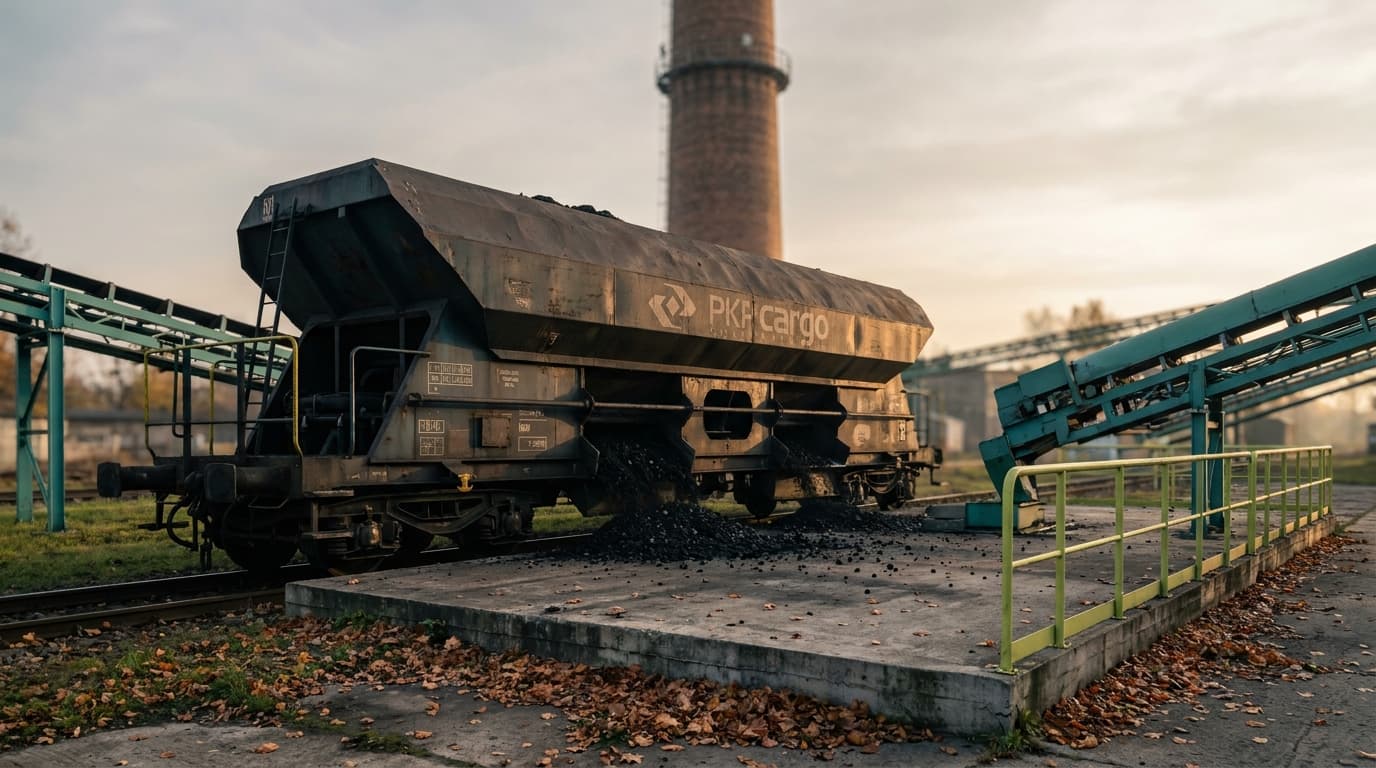
Does PKS dust during unloading? Yes, high fines content. Gravity discharge from a wagon emits dust. Practice: unload in a closed hangar with dust extractor or water sprayers.
How many wagons for 5,000 t PKS? A 60 t wagon = 55–58 t net. For 5,000 t: 87–91 wagons — 4–5 train sets of 20 wagons. Unloading 4 sets takes 2–3 weeks.
Summary
PKS is a solid agri fuel for CHP plants at large volumes (20,000+ t/year). Blended 15–25% with A2 wood pellet it delivers 500,000–1,000,000 PLN/year saving at manageable chloride risk. Key: monitoring chlorine in ash, HCl at outlet, exchanger condition.
Green Fuel Trading delivers PKS from certified suppliers in Indonesia and West Africa (ISPO/RSPO + KZR). For customers considering a first contract we provide a full monitoring protocol and monthly analytical report. Contact the GFT team — supplier audit and the first test batch are free for prospects considering annual contracts from 10,000 t.